Pendant vs Necklace: Meaning in Symbolic Jewelry
A necklace is the complete piece worn around the neck. A pendant is the hanging symbol, charm, stone, or ornament that may sit on a chain, cord, or necklace. In symbolic jewelry, this difference matters because the pendant usually carries the visible meaning, while the necklace carries that meaning through the body, the neckline, the material, and the daily wearing experience.
If you are choosing jewelry by intention, do not look only at the object name. Ask what role the piece should play. Do you want one clear symbol close to the heart? A pendant may be the stronger choice. Do you want a complete wearing structure, a material presence, a bead rhythm, or something that feels steady against the body throughout the day? A necklace may be more fitting.
This guide explains pendant vs necklace in plain terms, then goes deeper into symbolic jewelry: how chains, pendants, materials, length, and intention work together. The goal is not to make the choice complicated. The goal is to help you choose the piece that will actually stay meaningful after the first day of wearing it.
Pendant vs Necklace: The Simple Difference
A necklace is any complete jewelry piece designed to be worn around the neck. It may be a simple chain, a bead strand, a pearl necklace, a mala-style necklace, a cord necklace, or a chain with a hanging ornament. The key point is that the full wearable object is the necklace.
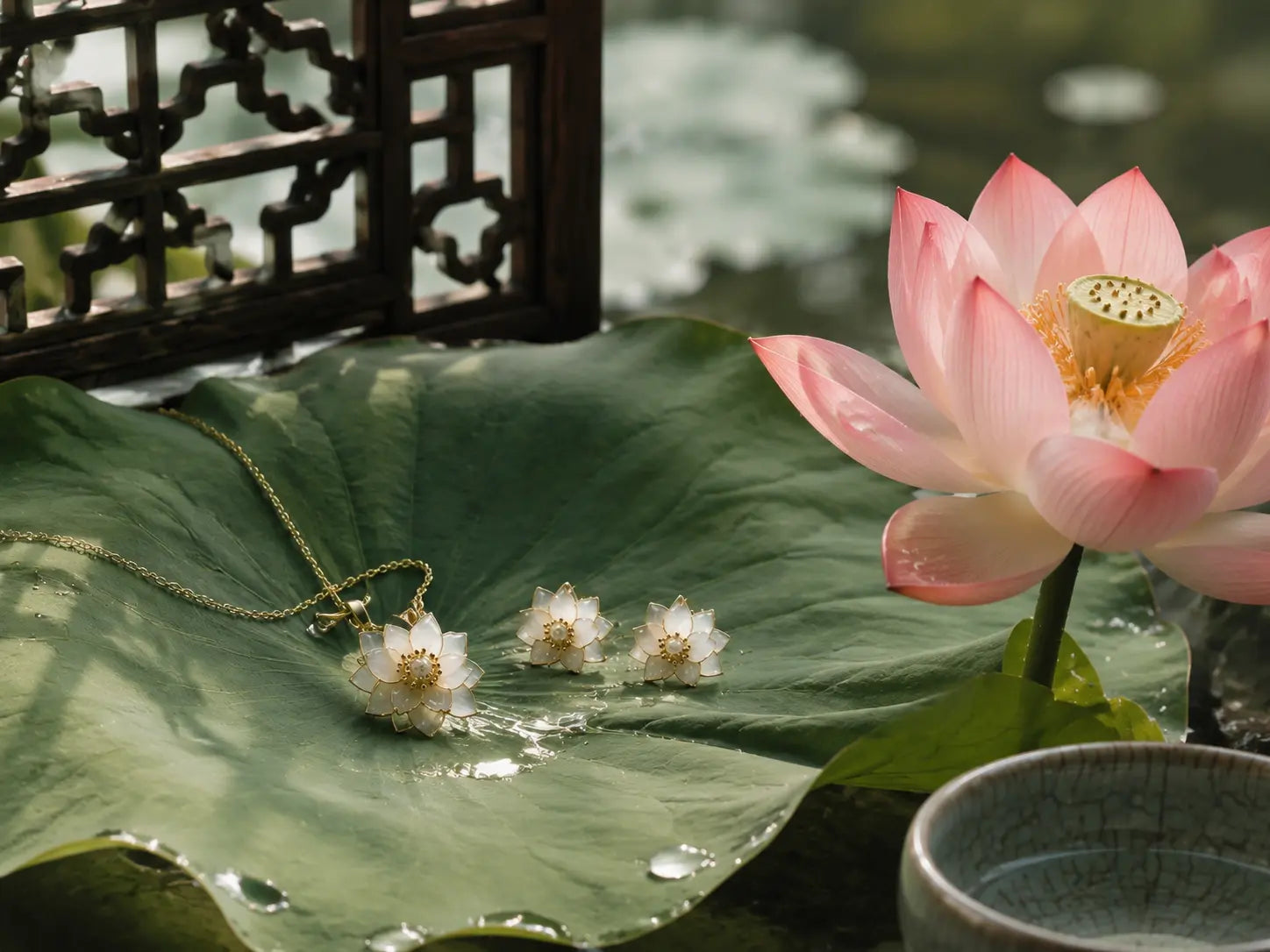
A pendant is the hanging element. It can be a carved jade dragon, a lotus charm, a Tree of Life disc, a zodiac pendant, a gemstone drop, a locket, a coin, or another meaningful form. A pendant usually needs something else to carry it: a chain, cord, ribbon, or necklace structure.
A chain is the carrier. It can be worn alone as a necklace, or it can hold a pendant and become a pendant necklace. This is why people often mix the words. In daily conversation, someone may call the whole thing a necklace even when the pendant is the part they actually care about.
All pendant necklaces are necklaces, but not all necklaces are pendant necklaces.
That single sentence solves most of the confusion. Necklace names the complete wearable piece. Pendant names the hanging focal element. Chain names the structure that may hold the pendant.
Why This Difference Matters in Symbolic Jewelry
In ordinary styling, pendant vs necklace may sound like a technical jewelry question. In symbolic jewelry, it becomes more meaningful because each part does a different job.
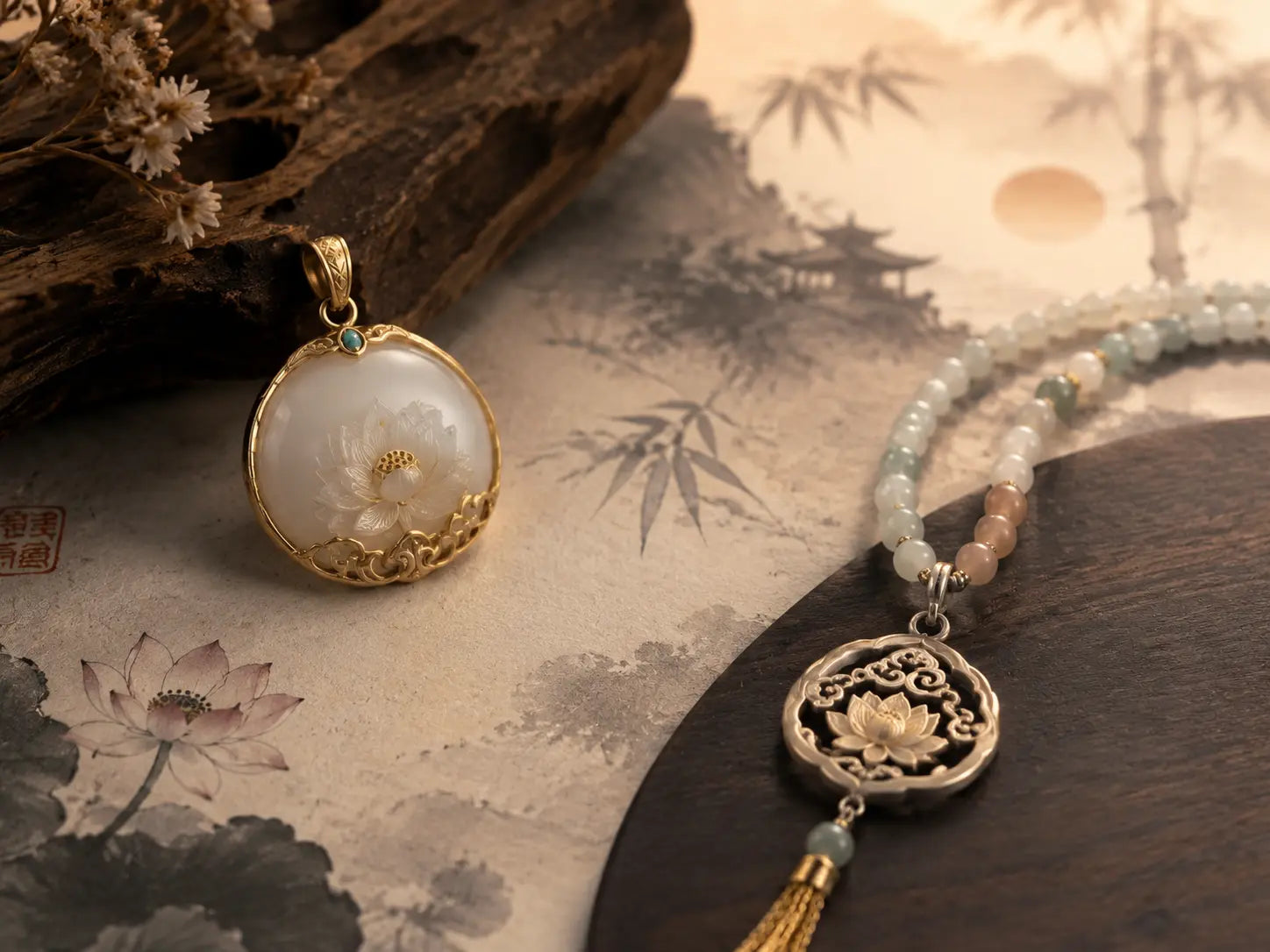
The pendant is often the first thing the eye reads. It can show a dragon, koi fish, lotus, gourd, zodiac animal, Tree of Life, Fu symbol, jade disc, or other form with cultural meaning. Because of that, the pendant often becomes the message. It is the part that says: this is about courage, renewal, movement, loyalty, grounding, clarity, or personal direction.
The necklace is how the message enters daily wear. Length changes where the piece sits on the body. Weight changes how often you notice it. Beads create rhythm and touch. A cord feels different from a polished metal chain. A mala-style necklace feels different from a single pendant on a fine chain. These details decide whether the piece becomes part of real life or stays in a drawer.
This is where many buyers make the wrong choice. They choose a symbol they like but ignore the structure. Or they choose a necklace style that looks good online but does not match the intention they want to carry. A meaningful piece should answer both questions: what does it say, and how will I live with it?
The Pendant: Visible Meaning
A pendant is strongest when you want one clear symbol to lead. It creates a focal point. It draws the eye. It gives the wearer a visible center. If a necklace is the sentence, the pendant is often the key word.
This is why pendants work well for symbols. A dragon pendant can speak to momentum and personal authority. A koi pendant can speak to perseverance and forward movement. A lotus pendant can speak to renewal. A Tree of Life pendant can speak to roots, growth, and continuity. A zodiac pendant can connect the wearer to birth year, personality, timing, or cultural memory.
A pendant is also flexible. Some pendants can move from one chain to another. You can wear the same pendant higher or lower by changing the chain length. You can make it more formal on a polished chain or more grounded on a cord. That flexibility matters if you want one symbol to stay with you through different outfits, seasons, or stages of life.
Choose a pendant when the symbol is the reason. If you keep returning to one image, one animal, one shape, or one stone because it feels connected to your current life, a pendant gives that meaning a clear place to sit.
The Necklace: Embodied Meaning
A necklace is stronger when the whole wearing experience matters. In symbolic jewelry, meaning is not always carried by a single charm. Sometimes it comes from material, repetition, weight, and closeness to the body.
A bead necklace or mala-style necklace is a good example. The meaning is not only in one hanging ornament. It is in the rhythm of the beads, the touch of the material, the way the strand rests against the chest, and the repeated awareness it creates when worn. A lapis lazuli mala necklace, for example, does not need a large pendant to carry meaning. The deep blue material and 108-bead structure already create a clear presence.
A necklace can also feel more complete as a design. Some necklaces are not built to hold a pendant at all. A strong chain, pearl strand, bead strand, or integrated symbolic necklace may look balanced because the entire piece is the design. Adding a pendant may make it less clear, not more meaningful.
Choose a necklace-first design when you want continuity rather than one focal point. This is especially useful if your intention is a state you want to carry through the day: clarity, steadiness, calm focus, grounded presence, or quiet confidence.
The Chain: The Carrier You Should Not Ignore
The chain is often treated as secondary, but it decides whether a pendant actually works. A pendant may have the right symbol, but if the chain is too weak, too short, too long, too bright, too delicate, or visually out of proportion, the meaning will not land well.
Good pendant support depends on several things. The chain or cord should be strong enough for the pendant's weight. The pendant bail should fit the chain. The length should place the symbol where you want it to sit. A pendant worn too high may feel crowded. A pendant worn too low may disappear into clothing. A heavy pendant on a fine chain may look unbalanced and may not feel secure.
External jewelry education sources often separate necklace, pendant, and chain for exactly this reason: a chain can be worn alone, paired with a pendant, or used as a layering base. For symbolic jewelry, that practical structure has meaning. The carrier decides whether the symbol can become a daily companion.
When a Pendant Is the Better Choice
Choose a pendant when your intention needs a clear image. A pendant works well when the symbol matters more than the full necklace structure. If you want to wear a dragon, koi fish, lotus, zodiac animal, gourd, jade carving, or Tree of Life design, the pendant format gives that symbol a strong visual center.
A pendant is also better when you want the meaning to be noticed. Not every symbolic piece needs to be private. Some symbols are chosen because the wearer wants to remember them every time they pass a mirror or receive a comment. The piece becomes a conversation point, but also a personal reminder.
Pendants are useful for gifting too. If you know the meaning someone is entering - a new job, a new year, a personal rebuilding season, a leadership moment, a transition, or a wish for steadier direction - a pendant can make the message clear without needing a long explanation.
But a pendant should not be chosen only because it looks powerful. Ask whether the symbol fits the person. A dragon pendant may be right for someone stepping into leadership. A lotus may fit someone seeking renewal. A Tree of Life may fit someone moving through change. The symbol should match a real inner direction, not only a trend.
When a Necklace Is the Better Choice
Choose a necklace when you want the whole piece to carry the meaning. This is often true for mala necklaces, bead necklaces, natural stone strands, and designs where material rhythm matters more than a single center symbol.
A necklace is also better when daily wear matters more than visual statement. Some people do not want a large symbol on the chest. They want something they can wear under a shirt, layer with other pieces, or feel quietly against the body. In that case, a necklace-first piece can be more faithful to the intention.
For example, if your intention is clarity, a lapis lazuli mala necklace may make more sense than a single pendant. The meaning comes from material presence and repeated beads. If your intention is grounding, an obsidian necklace may feel stronger because of the stone's weight and darkness. If your intention is long-term harmony, a jade necklace may feel more natural than a large focal charm.
Choose necklace-first when the question is not "what symbol should people see?" but "what state do I want to return to throughout the day?"
When a Mala Necklace Is Different
A mala necklace deserves its own category because it is not simply a necklace with beads. The bead count, material, length, and hand feel all shape its purpose. A mala necklace often carries meaning through repetition rather than through one central pendant.
TheFuMaster's approach to mala jewelry is grounded in daily wearing relevance. A mala does not need to be treated as a promise. It is valuable because it gives attention a rhythm. Each bead creates a small point of return. Worn as a necklace, it can become a reminder of focus, clarity, breath, or presence.
If you are choosing between a pendant necklace and a mala necklace, ask what kind of reminder you need. A pendant gives you a symbol to see. A mala gives you a rhythm to feel. One is more visual. The other is more tactile and continuous.
How to Choose by Intention
The best way to choose between a pendant and necklace is not to start with category. Start with intention. What do you want this piece to remind you of when you wear it?
If your intention is courage, momentum, or personal authority, a dragon pendant may make the meaning visible. If your intention is perseverance, a koi symbol may be fitting. If your intention is renewal, lotus may be a cleaner symbol. If your intention is clarity or focus, a lapis lazuli mala necklace may carry that state more naturally through color and repetition.
After intention, choose the form. Ask whether your intention needs a visible symbol or a full-body wearing experience. If it needs a symbol, choose a pendant. If it needs steady material presence, choose a necklace. If it needs rhythm and touch, choose a mala necklace.
Then choose material. Jade, obsidian, lapis lazuli, sandalwood, bodhi seed, pearl, silver-tone metal, and gold-tone metal all create different feelings. Material is not decoration only. It changes the weight, color, temperature, and mood of the piece.
Finally, check daily wear. A meaningful necklace that is too long, too short, too heavy, or hard to style will not become a real part of your life. The best symbolic jewelry is the piece you actually wear enough for the meaning to repeat.
Pendant, Necklace, and Manifestation
Manifestation is not asking a pendant or necklace to create the result for you. A more grounded definition is attention, belief, and repeated action moving in the same direction. Jewelry can support manifestation when it keeps that direction close to the body and easy to remember.
A pendant works well when the manifestation is connected to a clear symbol. If you choose a dragon pendant, you may be choosing to remember forward power and disciplined confidence. If you choose a koi pendant, you may be choosing perseverance. If you choose a Tree of Life pendant, you may be choosing growth through change.
A necklace works well when the manifestation is connected to a state. A mala necklace can remind you to return to clarity. A jade necklace can remind you to move with steadiness. A natural stone necklace can remind you of grounding, focus, or patience. The piece does not create the result by itself. It makes the chosen direction visible and physical enough to practice.
If you are drawn to a pendant or necklace, do not dismiss that attraction as random. It may be the beginning of attention. A person often chooses a meaningful piece because something inside is already asking for a form. Respect that seed, then give it action. The object reminds you. You still have to live the reminder.
Common Mistakes When Choosing
The first mistake is choosing only by appearance. Beauty matters, but symbolic jewelry should also match intention. If the symbol has no real connection to your life, the piece may look good but fail to stay meaningful.
The second mistake is ignoring structure. A pendant can be beautiful, but if the chain is wrong, the whole piece may feel awkward. A necklace can have strong material, but if the length does not suit your neckline or clothing, you may avoid wearing it.
The third mistake is overloading one piece with too many meanings. Do not ask one pendant to represent courage, love, wealth, protection, clarity, renewal, and luck all at once. Choose one primary intention. A clear meaning is easier to return to.
The fourth mistake is expecting the piece to replace behavior. A necklace can remind you of clarity, but you still need to make clearer choices. A pendant can remind you of perseverance, but you still need to continue. Meaning becomes real through repeated action.
The fifth mistake is using fear as the reason to buy. A meaningful piece should create steadiness, not anxiety. Choose from respect and attraction, not from fear that something bad will happen if you choose wrong.
TheFuMaster Examples: Pendant-Focused and Necklace-First
If you want a pendant-focused example, the Jade Dragon Pendant is a clear case. The dragon is the center of the piece. The meaning is visible. The pendant format works because the symbol itself carries the message: movement, confidence, authority, and forward growth. The chain supports the symbol, but the dragon leads the interpretation.
If you want a necklace-first example, the Lapis Lazuli 108 Mala Necklace works differently. Its meaning does not depend on one large hanging symbol. The deep blue material, bead count, and full strand structure create the experience. It is a necklace for clarity, focus, and presence through rhythm.

For a wider view, explore TheFuMaster's Necklaces & Pendants collection. Look at each piece with two questions: what is the visible meaning, and how will the structure feel in daily wear?
Final Guidance
If you want one clear answer, remember this: a pendant is the meaning you see; a necklace is the meaning you wear. The pendant gives the symbol a center. The necklace gives the symbol or material a life on the body.
Choose a pendant when one form keeps calling your attention. Choose a necklace when the whole piece, material, rhythm, and fit matter more than one focal symbol. Choose a mala necklace when repetition and touch are part of the meaning. The right choice is not the one with the more impressive name. It is the one you will return to with belief, attention, and action.
FAQ
Is a pendant the same as a necklace?
No. A necklace is the complete jewelry piece worn around the neck. A pendant is the hanging ornament, symbol, stone, or charm that may be attached to a chain, cord, or necklace.
What is a pendant necklace?
A pendant necklace is a necklace that includes a hanging pendant. The chain or cord carries the piece around the neck, while the pendant creates the visual focal point.
Can a pendant be worn without a necklace?
A pendant usually needs a chain, cord, ribbon, or other carrier to be worn. Without something to suspend it, the pendant is only the decorative or symbolic element.
Is a chain the same as a necklace?
A chain can be a necklace if it is worn around the neck on its own. It can also act as the carrier for a pendant. Not every necklace is simply a chain, and not every chain is designed to hold a pendant.
Should I choose a pendant or a necklace for symbolic jewelry?
Choose a pendant if the symbol is the main reason you are wearing it. Choose a necklace if the full structure, material, rhythm, length, and daily wearing experience matter more.
When is a mala necklace better than a pendant?
A mala necklace is better when bead rhythm, touch, repetition, and material presence are part of your intention. A pendant is better when one visible symbol carries the main meaning.
Can I put any pendant on any chain?
No. The pendant and chain should match in weight, bail size, strength, length, and visual proportion. A heavy pendant on a weak chain can feel unbalanced and may not be practical for daily wear.
How does pendant or necklace choice connect with manifestation?
It connects through attention, belief, and repeated action. A pendant can keep one symbol visible. A necklace can keep a state or material presence close to the body. The piece reminds you; your actions give the reminder meaning.
Is symbolic jewelry supposed to promise luck or results?
No. Symbolic jewelry should be understood as a meaningful reminder, not a promise of a specific result. Its value is in helping you return to a chosen direction with attention and consistency.
What is the best first piece: pendant, necklace, or chain?
If you want one clear symbol, start with a pendant necklace. If you want something more subtle and versatile, start with a simple necklace or chain. If you want rhythm and touch, start with a mala-style necklace.