Green Bracelet Meaning in Feng Shui: Growth and Luck
A green bracelet in Feng Shui usually symbolizes growth, renewal, harmony, and steady luck. Green is connected with the Wood element, so it carries the feeling of something alive, rooted, flexible, and still moving upward. In Chinese jewelry, a green bracelet may also suggest jade culture, Fu symbolism, fresh starts, and a quiet wish for life to develop in a balanced direction.
That is why a green bracelet works so well as everyday meaningful jewelry. It is not as bold as red, not as heavy as black, and not as openly wealth-focused as gold. Green has a patient tone. It is the color of leaves returning after winter, a project beginning to take shape, or a person choosing to grow without forcing the timing. For someone drawn to Feng Shui but careful about exaggerated claims, green is one of the easiest bracelet colors to understand and wear.
This guide explains green bracelet meaning in Feng Shui and Chinese jewelry, how green connects with the Wood element, how jade differs from other green stones, what a Fu charm adds, which wrist to wear a green bracelet on, and how to choose a piece that feels right for daily life.
What Does a Green Bracelet Mean in Feng Shui?
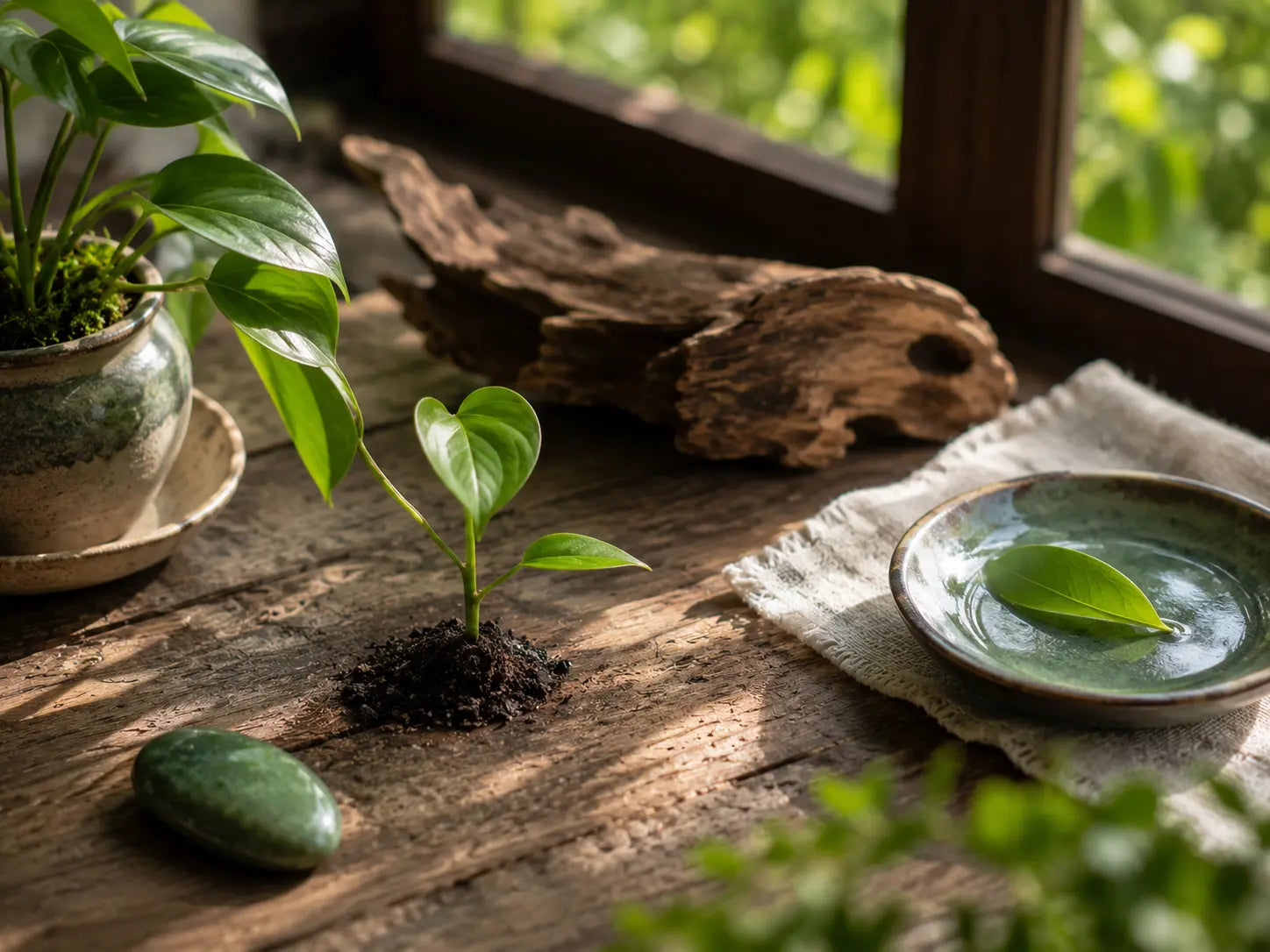
In Feng Shui, green is most often understood through the Wood element. Wood is not only the physical material of a tree or branch. It is a quality: growth, flexibility, renewal, upward movement, and the ability to keep developing from a rooted place. When that color is worn on the wrist, the meaning becomes personal and portable.
A green bracelet can represent a season of becoming. It may suit someone beginning a new job, entering a calmer chapter, rebuilding a routine, starting a project, or choosing to move forward after a difficult period. The bracelet becomes a small visual cue: keep growing, but stay grounded; move upward, but do not rush the roots.
This is different from treating jewelry as a shortcut. The more useful reading is that a green bracelet gives language to an intention you already want to carry. If your life is asking for patience, balance, better pacing, or steadier growth, green gives that intention a visible form.
For TheFuMaster, this matters because the strongest meaningful jewelry should not feel loud or theatrical. A good bracelet should help the wearer return to a clear idea in ordinary moments: typing at a desk, walking into a meeting, opening a notebook, commuting, preparing for study, or taking a pause before answering too quickly.
Green and the Wood Element
The five elements used in Feng Shui and wider Chinese thought are Wood, Fire, Earth, Metal, and Water. Each has its own movement, emotional tone, season, and color language. Green belongs most naturally with Wood, which is why green is so often associated with growth, spring, renewal, vitality, and new beginnings.
Wood grows by staying both rooted and flexible. A branch does not move like a flame, and it does not stand still like stone. It bends, extends, adjusts, and keeps reaching for light. That is the deeper reason green is useful as a bracelet color. It is not just decorative. It expresses a type of progress that is alive but not frantic.
When people look for a green Feng Shui bracelet, they are often not only looking for a color. They are looking for a feeling: less pressure, more room to develop, steadier timing, and a reminder that growth can be gradual. A bracelet cannot create that season by itself, but it can keep the idea close to the body, especially when the wearer is trying to change daily habits.
The Wood element also helps explain why green is often chosen for birthdays, graduations, new roles, business beginnings, and personal resets. These are moments when the future is not fully formed yet. Green respects that unfinished quality. It says the new thing is allowed to grow step by step.
Why Green Feels Different From Red, Black, and Gold
Color changes the emotional reading of a bracelet before the wearer explains anything. Red usually feels active, celebratory, warm, and visible. Black feels grounded, quiet, and serious. Gold or yellow often feels bright, confident, and connected with abundance or harvest. Green sits in a different place. It feels alive, calm, and developing.
This is why a green bracelet can be easier to wear than a more dramatic lucky-color piece. It does not announce itself too strongly. It can work with white, beige, black, denim, gray, brown, or natural linen. It can be worn by someone who wants a meaningful object but does not want to look overly styled or costume-like.
Green also feels less urgent. A red bracelet can feel like courage for a hard moment. A black bracelet can feel like a stable floor under a busy day. A gold bracelet can feel like warmth and confidence. A green bracelet feels like a return to life. It is the color someone may choose when they are beginning again, trying to grow a business, building a study rhythm, improving a home routine, or learning to stay consistent.
For gifting, this makes green useful. It can be personal without being too intimate. It can say, "I hope this next chapter grows well," without sounding intense. That is why green bracelets often work for graduation, new job, new home, new business, birthday, or fresh-start gifts.
Is a Green Bracelet the Same as a Jade Bracelet?
No. This is one of the most important distinctions for buyers. A green bracelet is a color category. A jade bracelet is a material category. Many jade bracelets are green, but not every green bracelet is jade. A green bracelet may be made from jade, aventurine, agate, glass, resin, cord, dyed stone, or another green material.
This distinction matters because green carries color meaning, while jade carries cultural and material meaning. In Chinese jewelry, jade has a long association with refinement, character, beauty, longevity in family memory, and personal dignity. Green jade, especially in richer tones, has become one of the most recognized forms of Chinese jewelry. But calling every green stone jade is inaccurate and can mislead the buyer.
Many shoppers today are aware of this problem. In recent online discussions, people often ask whether a bracelet sold as jade might actually be green aventurine, dyed quartz, glass, or another material. That is a practical concern, not a small detail. A meaningful bracelet should be sold honestly. The material name, bead look, price level, and product description should make sense together.
If you are buying a green bracelet for its Feng Shui color meaning, the exact material may be less important than the feeling and design. If you are buying it specifically as jade, the material matters much more. The safest approach is to separate the two questions: first, do I want the green color meaning of growth and renewal? Second, do I specifically want jade, or do I simply want a green stone bracelet that carries a similar visual tone?
Green Jade, Green Aventurine, Green Agate, and Green Cord
Different green materials create different readings on the wrist. They may share the broad color language of growth and renewal, but the texture, translucency, shine, weight, and cultural association can change the message.
Green jade has the strongest Chinese cultural association. It often feels refined, traditional, and heirloom-like. A jade bangle may feel more formal and heritage-coded in appearance, while a jade bead bracelet can feel easier for daily wear. If the piece is genuine jade, the description should be clear about the type and quality. If the piece is jade-colored rather than jade, it should not be presented as something it is not.
Green aventurine often has a softer, more casual feel. It is commonly chosen by people who like green stone jewelry but want something approachable and relaxed. Its look can vary from pale green to deeper green, sometimes with tiny mineral sparkle. In buyer discussions, this sparkle is one reason people compare aventurine with other green stones. If a bracelet is very uniform, glassy, or unusually low-priced, it may be worth reading the material description carefully.
Green agate can feel steadier and more grounded. It often has bands, depth, or a polished smoothness that gives the bracelet a calm daily quality. It is a good fit for someone who wants green meaning without the more specific cultural weight of jade.
Green cord, enamel, resin, or glass can still carry color symbolism, but the meaning depends more on design and symbol than material. A green cord bracelet with a Fu charm, for example, may be less about stone identity and more about the combination of green growth energy and Chinese good-fortune language.
The point is not that one material is always better. The point is accuracy. A buyer should know whether they are choosing jade, a different green stone, or a green symbolic design. Clear language makes the bracelet feel more trustworthy and more wearable.
How a Fu Charm Changes the Meaning of a Green Bracelet
A Fu charm adds a direct Chinese good-fortune message to the bracelet. Fu is often translated as good fortune, auspicious happiness, or the positive arrival of favorable conditions. On a green bracelet, Fu gives the color of growth a more specific cultural voice: may this new chapter develop well, and may the path carry good timing.
This combination works because the two ideas support each other. Green suggests growth, renewal, and steady development. Fu adds the wish that growth happens under favorable conditions. Together, they form a bracelet that feels calm rather than aggressive. It is not shouting for sudden wealth. It is expressing a more refined hope: let life move in a good direction, and let the wearer keep growing with steadiness.

The Green Stone Fu Charm Bracelet is a natural example of this meaning. The green beads carry the feeling of renewal and patient development. The Fu charm gives the bracelet a clear Chinese good-fortune message. The result is suitable for someone who wants a calm piece for daily wear, a fresh-start gift, or a small symbol for steady growth.
For readers who want to compare more pieces with Fu symbolism, TheFuMaster's Luck & Fu collection is the most relevant starting point. If the main goal is to compare bracelet sizes, materials, and everyday styling, the broader bracelets collection gives more options.
When Should You Wear a Green Bracelet?
A green bracelet is especially suitable when you are beginning something that needs patience. It fits a new job, a new study plan, a new business idea, a personal reset, a home transition, a creative project, or any season where you want to grow without burning out.
It can also be useful when your life feels too red or too black in energy. By that, we mean too urgent, too pressured, too defensive, or too heavy. Green brings a different rhythm. It asks for steady care. It reminds you that progress can be quiet, and that consistency can be more powerful than a dramatic start.
For work, a green bracelet can sit comfortably beside a watch, a plain cuff, or a simple ring. It does not need to dominate the outfit. For study, it can act as a small marker of routine: open the laptop, put the phone aside, return to the chapter, keep going. For a business owner, green can represent a wish for the business to develop in a well-paced, organized direction rather than chasing every opportunity at once.
For personal life, green is a good color when someone is returning to themselves. This could mean building better sleep, tidying the home, restarting exercise, learning to say no, making time for a quiet hobby, or simply choosing a calmer pace. In these situations, the bracelet is not a dramatic statement. It is a wearable reminder that small daily choices shape the next season.
Which Wrist Should You Wear a Green Bracelet On?
There is no single wrist rule that every person must follow. Feng Shui-inspired wearing advice often talks about the left side as more receptive and the right side as more expressive or action-oriented. That can be a useful starting point, but it should not become rigid.
Wear a green bracelet on the left wrist if your intention is to receive steadiness, support, renewal, or a calmer sense of timing. This can suit someone entering a new chapter, recovering confidence, or wanting to feel more settled while life is changing.
Wear it on the right wrist if your intention is to express growth through action. This can suit someone launching a project, making decisions, presenting work, meeting clients, studying actively, or moving from planning into doing. The right wrist can feel more outward because it is often the side you use to write, gesture, shake hands, or work.
Comfort still comes first. If the bracelet catches on a keyboard, feels heavy while writing, or gets in the way during work, choose the wrist that allows you to wear it consistently. A meaningful bracelet is most effective as part of real life, not as a rule you fight all day.
How to Choose a Green Bracelet for Your Intention
Start with the reason you are drawn to green. If you want the most classic Chinese jewelry feeling, look for jade tones, refined green beads, or a design connected with Fu. If you want a fresh-start feeling, choose a clean green stone bracelet that looks light and wearable. If you want something more rooted, choose deeper green beads or a design with brown, wood, or gold-tone accents.
Next, check the material description. If a listing says jade, it should be clear and credible. If it says green stone, green agate, aventurine, or another material, read it as that. Do not assume every green bracelet is jade. This protects both your expectations and the meaning of the piece.
Then consider size and daily wear. Large beads can feel strong, but they may not suit every wrist or workday. Small beads can be easier to wear but may feel less present. A charm adds meaning, but it should not be placed so awkwardly that it turns the bracelet into something you stop wearing. The best piece is the one you can keep returning to without effort.
Finally, choose a simple phrase for the bracelet. It could be "steady growth," "fresh start," "patient progress," "return to balance," or "grow in the right direction." The phrase does not need to be written anywhere. It only needs to be clear enough that when you see the bracelet, you remember why you chose it.
Green Bracelet Gift Meanings
A green bracelet can be a thoughtful gift because the meaning is warm without being too forceful. It is suitable for someone starting a new job, graduating, opening a small business, moving to a new city, rebuilding a routine, or entering a season where slow growth matters more than quick results.
The best gift message should be short and grounded. You can write: "For steady growth in your next chapter." Or: "May this remind you to keep growing at your own pace." Or: "A small green symbol for renewal, patience, and good timing." These lines explain the meaning without making the gift feel heavy.
Green is also useful when you do not know whether the recipient likes strong symbolic jewelry. It is less intense than red and less formal than some gold designs. A green bracelet can look natural, relaxed, and wearable, especially if the design is simple. That makes it easier for the recipient to use rather than simply keep in a box.
If the recipient has a strong connection to Chinese culture, jade, or Fu symbolism, choose the gift more carefully. A Fu charm may feel meaningful for someone who likes Chinese auspicious language. A jade-style piece may feel more traditional. A simple green stone bracelet may work better for someone who likes the color and message but prefers a lighter cultural reference.
What Green Bracelet Buyers Often Get Wrong
The first mistake is assuming that green automatically means jade. This is common because green jade is so famous, but it creates confusion. If jade matters to you, ask for the material details. If the color meaning matters more, you can enjoy other green stones without treating them as substitutes for jade.
The second mistake is choosing the strongest claim instead of the strongest design. A product page that promises too much may sound exciting at first, but a bracelet has to live on the wrist. Design, comfort, material clarity, and the feeling you actually want to carry are more important than dramatic wording.
The third mistake is choosing a bracelet only for a chart. Feng Shui color meaning is useful, but the wearer's own response matters. If green keeps catching your attention, that may say something about the season you are in. If another color feels more honest, listen to that too. Meaningful jewelry should help you understand your own intention, not trap you inside a rule.
The fourth mistake is buying a gift that is too personal for the relationship. A dramatic jade bangle may be beautiful, but it may not be the right gift for a coworker. A simple green bead bracelet or Fu charm bracelet may feel easier, especially when the message is about new beginnings, steady progress, or good timing.
How to Style a Green Bracelet
Green bracelets usually style best with restraint. Let the color carry the message. Pair green with black for grounded growth, with white for freshness, with brown for an earthy feeling, or with gold-tone accents for warmth. Avoid stacking too many competing colors if you want the green meaning to stay clear.
For everyday workwear, a green bracelet can sit beside a plain watch or a simple metal bracelet. For casual clothing, it works well with cotton, linen, denim, knitwear, and earth-tone layers. For a more refined look, choose a green piece with smaller beads, a cleaner charm, or a more polished finish.
If the bracelet includes a Fu charm, give the charm space. Too many other symbols on the same wrist can make the meaning look crowded. One strong symbol often feels more premium than a stack of unrelated signs.
Green also works well as a seasonal piece. It feels especially natural in spring and early summer, but it can also be powerful in winter because it reminds the wearer that life continues beneath the surface. This is part of green's quiet strength: it does not need a loud moment to make sense.
FAQ
What does a green bracelet symbolize?
A green bracelet usually symbolizes growth, renewal, harmony, and steady luck. In Feng Shui, green connects with the Wood element, which carries the feeling of upward development, new beginnings, flexibility, and rooted progress.
Is a green bracelet good luck?
Yes, a green bracelet can be worn as a good-luck symbol, especially when it includes Chinese Fu symbolism, jade tones, or an intentional gift message. The best interpretation is steady luck: favorable timing, patient growth, and a reminder to keep moving in a balanced direction.
Is every green bracelet jade?
No. Many jade bracelets are green, but not every green bracelet is jade. Green bracelets may be made from jade, aventurine, agate, glass, cord, resin, dyed stone, or other materials. If you specifically want jade, read the product material description carefully.
What is the difference between green jade and green aventurine?
Green jade has a deeper Chinese cultural association and is often read as refined, traditional, and heirloom-like. Green aventurine usually feels softer, more casual, and more approachable. Both can carry green color meaning, but they are not the same material.
Which wrist should I wear a green bracelet on?
Wear a green bracelet on the left wrist if your intention is to receive steadiness, renewal, and support. Wear it on the right wrist if your intention is to act on growth through work, decisions, study, or outward movement. Comfort should guide the final choice.
Can I give a green bracelet as a gift?
Yes. A green bracelet is a thoughtful gift for graduation, a new job, a new business, a birthday, a move, or a personal fresh start. Frame the message around steady growth, renewal, good timing, and patience.
What does a Fu charm add to a green bracelet?
A Fu charm adds Chinese good-fortune language to the bracelet. Green brings the feeling of growth and renewal, while Fu adds an auspicious wish for favorable conditions. Together, they create a calm daily symbol for a new chapter.
How do I choose a green bracelet for daily wear?
Choose by material clarity, bead size, comfort, color tone, and the meaning you want to carry. A bracelet you can wear naturally every day is usually more valuable than a dramatic piece that stays in a drawer.