From Ancient Amulets to Modern Companions
Ancient amulets were small meaningful objects kept close to the body, often shaped by material, color, form, symbol, or placement. Modern symbolic jewelry does not need to copy the old claims around those objects. Its grounded value is simpler: a companion piece can carry memory, identity, touch, and daily attention, helping the wearer return to a chosen direction in ordinary life.
This is why the journey from ancient amulets to modern companions still matters. Human beings have always used small worn objects to say something about who they are, where they belong, what they remember, and what they want to keep close. A bead, cord, pendant, ring, or carved seed may be small, but it can become large in meaning because it lives near the body.
For TheFuMaster, the important lesson is not to imitate the past too loudly. The better lesson is to understand why meaningful objects have endured. They stay with the wearer. They meet the hand. They interrupt automatic living. They become quiet, repeated reminders that meaning is not only something we think about. Sometimes it is something we wear.
What Were Ancient Amulets?
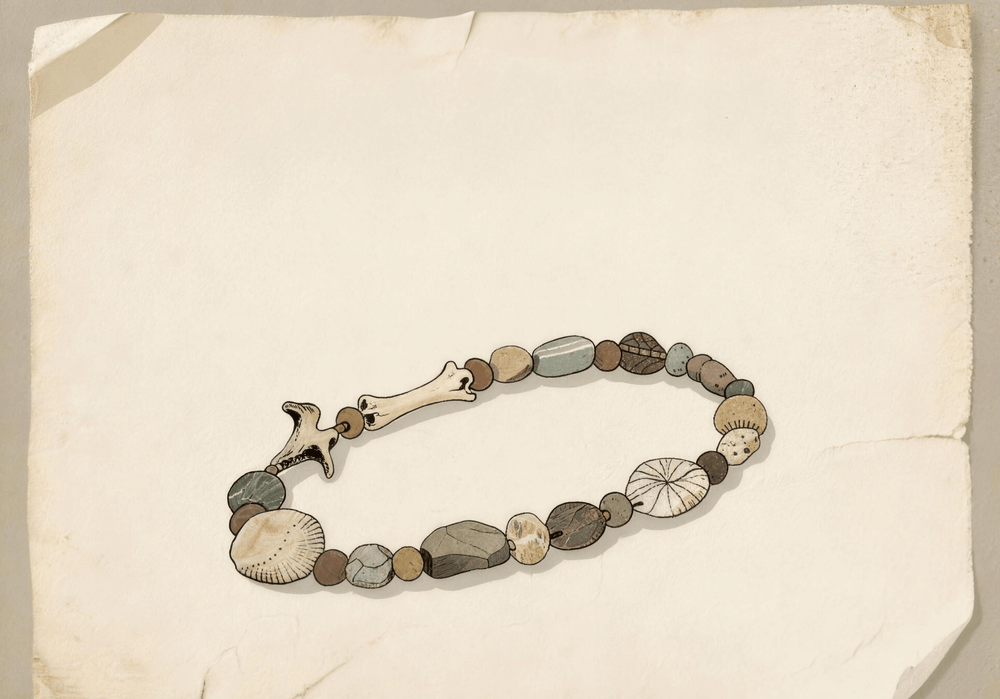
Ancient amulets were small objects carried, worn, tied, strung, carved, folded, or placed near the body because people believed those objects held meaning. They could be beads, stones, shells, shaped figures, knots, metal pieces, written tokens, carved seeds, or pendants. Their significance often came from the culture around them, the material used, the shape, the color, the inscription, or the part of the body where the object was placed.
In many historical settings, these objects were not treated as ordinary decoration. They were linked with family, status, care, memory, passage, belonging, personal hope, and community meaning. A small object could mark who someone was, what group they belonged to, what event they had passed through, or what they wanted to remember.
Modern readers should approach this history with respect and restraint. The old objects belonged to specific people, places, and systems of meaning. A modern jewelry brand should not take those contexts and turn them into easy promises. The better approach is to learn from the human pattern behind them: people have always wanted meaning close enough to touch.
The modern companion piece is not a copy of the ancient amulet. It is a grounded translation: a meaningful object chosen to carry memory, identity, touch, and attention in daily life.
Why Humans Keep Meaningful Objects Close
Jewelry is older than fashion. Early beads, shells, and personal ornaments show that human beings have long used the body as a place for meaning. A necklace can show belonging. A bead can carry memory. A ring can mark commitment. A cord can feel like a line between the inner life and the outer world.
This is one reason meaningful jewelry survives across time. It is not only seen by other people. It is felt by the wearer. The object moves with the body, warms with the skin, catches the eye, touches the hand, and appears in daily routines. That closeness changes the relationship between the person and the object.
A painting may stay on a wall. A written note may stay in a drawer. A photograph may stay on a desk. A worn object travels. It goes through doors, airports, meetings, family dinners, difficult conversations, quiet walks, and ordinary mornings. Over time, the object gathers association because it has been present.
That presence is the beginning of companion jewelry. The value is not that the object controls life. The value is that it accompanies life closely enough to become part of how the wearer remembers, pauses, and chooses.
From Amulet to Companion: What Changed?
The word “amulet” carries old weight. It points to objects that were used in particular historical contexts, often with meanings that cannot be separated from the communities that made and used them. A modern companion piece is different. It does not claim the same role. It belongs to the daily life of the wearer who chooses it now.
What changes is the center of meaning. In an ancient context, meaning may have been shaped by a shared system, a maker, a family, a place, a local custom, or a community. In modern symbolic jewelry, meaning is usually more personal. The wearer chooses the object because it matches a life stage, a memory, a value, a material feeling, or a direction they want to keep visible.
This shift is important for TheFuMaster. The brand should not say that a modern object performs an old function. The stronger message is more honest and more premium: a companion piece helps the wearer hold a relationship with meaning. It gives the hand and eye something to return to. It makes intention less abstract.
A modern companion can be worn during work, travel, study, rest, decision-making, or a new chapter. It can be a bead necklace, a bracelet, a pendant, or handheld beads. Its role is not to replace action. Its role is to make the chosen direction easier to remember while action happens.
Materials, Shapes, and Body Placement
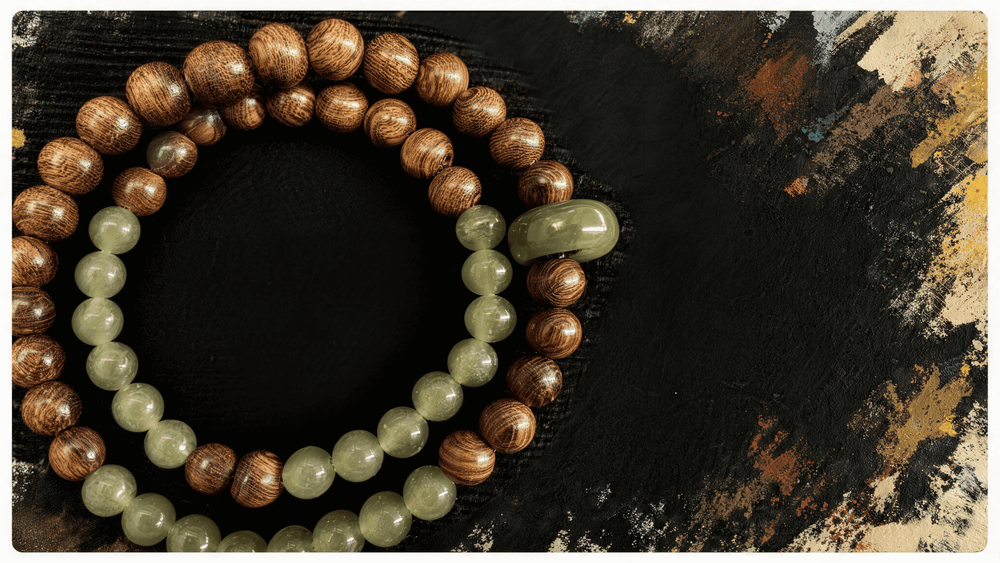
Meaningful objects become more powerful in memory when they are specific. A general idea is easy to forget. A material has weight. A seed has texture. A cord has tension. A bead has rhythm. A pendant has position. A ring meets the fingers. A necklace rests against the body. These details make meaning physical.
Materials matter because they change how the object feels and ages. Wood and seed beads feel warm and organic. Stone can feel cool and dense. Metal can feel precise and structured. Cord can feel humble and practical. Each material speaks differently before a single word is added.
Shape also matters. A round bead invites movement. A pendant gives the eye a single center. A knot suggests binding or continuity. A carved grain can make a natural surface feel like a symbol. Repetition can make a strand feel like time passing through the fingers.
Body placement matters too. A necklace sits close to the chest. A bracelet moves with the hand. A ring is noticed in touch and gesture. Handheld beads are returned to intentionally. The same symbol can feel different depending on where it lives on the body.
This is why modern companion jewelry should be chosen by more than appearance. The question is not only, “Does it look good?” The better question is, “How will this object meet me during the day?”
Beads as a Human Technology of Attention
Beads deserve special attention because they are one of the most enduring forms of meaningful objects. A bead is small, repeatable, and tactile. It can be counted, moved, strung, held, worn, arranged, repaired, and passed from one hand to another. This makes beads uniquely suited to memory and attention.
Unlike a single charm, a strand of beads creates rhythm. The hand can move one bead, then the next, then the next. The repetition is simple, but it can change the pace of the body. The wearer may slow down, breathe differently, notice the texture, and return to the present task.
This is not a dramatic idea. It is practical. Repetition gives attention a structure. The mind can wander in a thousand directions, but the hand has one bead at a time. That is why bead strands remain meaningful across many traditions and modern uses. They give focus a physical path.
For TheFuMaster, this is a clean way to explain mala-inspired design without turning the article into instruction for a closed tradition. Beads can be understood as a tactile companion: something the wearer can hold, move, and return to when life becomes noisy.
Why Mala Beads Still Feel Personal Today
Mala beads remain personal because they combine structure, touch, and repetition. A full strand often uses 108 beads, a number that carries layered meanings in several Asian traditions. Modern wearers may approach that number in different ways. The important point for this article is not to make a fixed claim for every person. The important point is that the count gives the strand a sense of completeness and rhythm.
A mala-inspired necklace also changes the relationship between jewelry and time. A small pendant may be noticed in one glance. A bead strand asks for sequence. Each bead can become a moment. Each pass of the fingers can become a pause. The object invites the wearer to slow down bead by bead.
Bodhi seed beads add another layer. The word “bodhi” is associated with awakening and clear seeing in Asian cultural memory. In modern companion jewelry, bodhi seed beads can be understood through texture, natural origin, warmth, and the feeling of a material that becomes more personal through contact and use.
This is why mala beads can feel more intimate than ordinary necklaces. They are not only worn. They are handled. They become familiar through touch. Over time, the wearer knows the weight, spacing, surface, and sound of the strand. That familiarity is part of the companion feeling.
Dragon Eye Bodhi Seed Bead Necklace: A TheFuMaster Example
The Dragon Eye Bodhi Seed Bead Necklace is a strong example of ancient-to-modern translation because it carries several companion qualities at once: natural bead texture, 108-bead structure, visible grain, a red accent bead, durable cord, and a form that can be worn close or handled in quiet moments.

The Dragon Eye grain gives the beads a visual center. It keeps the natural surface from feeling plain. The 12mm bead size gives weight and presence. The red accent bead creates a small point of attention without making the piece loud. The cord construction keeps the object practical rather than overly delicate.
The product line says it clearly: “For days when bead by bead helps you face the day with grounded courage.” That phrase works because it does not promise that the object changes life for the wearer. It says the object can help the wearer return, bead by bead, to courage, clarity, and steady presence.
Readers who want a broader material path can explore Wood & Seed Bead Jewelry, where natural texture is the main language. Readers who prefer objects held in the hand can explore Handheld Beads, where touch and return are even more central.
How to Choose a Modern Companion Piece
Start with meaning, not trend. A companion piece should match something the wearer genuinely wants to remember. That might be steadiness, clarity, family memory, courage, patience, a new chapter, or a commitment to move through the day with more attention.
Then choose by material feel. If the wearer likes warmth and organic texture, wood or seed beads may feel right. If the wearer likes weight and polish, stone may feel better. If the wearer wants a clear visual center, a pendant or charm may make more sense. If the wearer wants repeated touch, beads are often the strongest choice.
Choose by body relationship. A necklace is close and personal. A bracelet is visible during action. A ring appears in gesture. Handheld beads ask to be picked up. The form should match the way the wearer actually lives.
Choose by daily use. If the piece is too fragile, too loud, or too difficult to wear, it may stay in a drawer. A true companion piece should be able to enter real life. It should feel considered, but not impossible to use.
Finally, choose by language. The best symbolic jewelry does not need a dramatic explanation. A short sentence should be enough: “This helps me return to steadiness,” or “This reminds me to move bead by bead,” or “This keeps a quiet direction close.” If the meaning cannot be said simply, it may not be ready to wear.
What We Should Not Borrow From the Past
Ancient objects deserve care. They belonged to real people and real contexts. Modern jewelry can learn from them, but it should not flatten them into marketing slogans. The goal is not to borrow an old object’s entire world. The goal is to understand why human beings have always looked for meaning in things they can hold and wear.
We should not borrow certainty. Historical objects often carried meanings that were shaped by their own time and place. A modern product should not claim the same role in a different world. That would be careless and unconvincing.
We should not borrow fear. Meaningful jewelry does not need to make people feel unsafe without it. TheFuMaster should speak from steadiness, not pressure. A companion piece is chosen because it helps the wearer remember, not because the wearer is made to feel incomplete.
We should not borrow complexity without respect. Symbols, bead counts, seeds, colors, and forms may have long histories. The modern article should explain them with restraint and avoid pretending that one sentence can contain every culture that ever used them.
What we can borrow is the human insight: small objects can carry large meaning when they are close, repeated, and personally chosen.
Ancient Amulets vs Modern Symbolic Jewelry
Ancient amulets were usually shaped by a specific context. Their meaning depended on makers, materials, customs, families, bodies, and places. Modern symbolic jewelry is usually chosen by an individual who wants an object to match a personal direction.
The difference matters. Ancient amulets are historical objects. Modern companion jewelry is a present-day relationship. One belongs to its original context. The other belongs to the wearer’s current life.
But there is also a shared thread. Both are close to the body. Both turn meaning into matter. Both show that humans do not live by ideas alone. We tie meaning to things we can touch because touch makes memory easier to return to.
This is the most useful bridge for TheFuMaster. The brand does not need to claim ancient authority. It can offer modern objects that are designed with cultural awareness, material care, and daily relevance.
How a Companion Piece Becomes Personal Over Time
A meaningful object is not always personal on the first day. Sometimes the wearer chooses it for a clear reason, but the deeper relationship forms later. It becomes personal because it appears again and again in ordinary scenes: on the desk while working, beside a cup of tea, inside a travel bag, against a sweater sleeve, or in the hand during a quiet pause.
This repeated presence matters. A companion piece gathers memory through use. The first day may be about intention. The tenth day may be about habit. The hundredth day may be about recognition: the object has been present through enough mornings, decisions, delays, and returns that it no longer feels separate from the wearer’s life.
Bead strands are especially good at this because they change through contact. The surface becomes familiar. The weight becomes expected. The spacing becomes known to the fingers. Even small changes, such as the way a cord settles or the way a bead catches light, can make the piece feel less like a product and more like a companion.
This is also why a modern companion piece does not need dramatic language. The relationship is built through repetition. The wearer does not need to explain it to everyone. The object may simply become the thing they reach for before leaving home, the thing they touch before answering a difficult message, or the thing that marks a chapter they are still learning how to name.
Daily Use Without Drama
Modern symbolic jewelry works best when it can fit into real life without demanding a performance. The wearer should be able to put it on, move through the day, and let the object meet them naturally. Meaning does not have to be announced every morning. It can be quiet and still effective as a reminder.
For a bead necklace, daily use might mean wearing it under a jacket, placing it on a bedside table, holding it before a focused work session, or carrying it during travel. For handheld beads, daily use might mean a two-minute pause before sleep or a short return to touch after a tense conversation. The point is not complexity. The point is return.
This makes companion jewelry different from a decorative piece chosen only for an outfit. It still needs beauty, proportion, and material quality, but it also needs a relationship with attention. The wearer should be able to answer one simple question: when I notice this object, what do I want it to bring me back to?
Why Companion Jewelry Feels Personal as a Gift
Companion jewelry can make a strong gift because it gives the receiver something to keep close after the moment has passed. Flowers fade. A message may be saved but forgotten. A small meaningful object can enter daily routine and continue speaking quietly.
This kind of gift works well for a new chapter, a move, a graduation, a return to self, a demanding season, or a person who values tactile objects. The gift should not be explained too heavily. It only needs a note that gives the receiver room to make the meaning personal.
For a bead necklace, the note might say: “May this be something steady to return to, bead by bead.” For a friend in transition: “Carry what matters close, and let it meet you in ordinary moments.” For a self-gift: “A small reminder is enough when it brings me back to my direction.”
The best companion gifts are not loud. They are exact. They feel chosen for the person, not for the trend. That is what separates meaningful jewelry from decorative jewelry with a story attached afterward.
FAQ
What is an ancient amulet?
An ancient amulet is a small meaningful object that people in specific historical contexts kept close to the body. Its meaning could come from material, shape, color, symbol, inscription, placement, or community use.
What is the difference between an amulet and modern symbolic jewelry?
An amulet belongs to a specific historical and cultural context. Modern symbolic jewelry is a present-day piece chosen by the wearer to carry personal meaning, memory, identity, or daily attention.
Why do people still wear meaningful jewelry today?
People wear meaningful jewelry because it makes inner direction physical. A small object close to the body can help the wearer remember a value, person, chapter, or intention during ordinary life.
What do beads add to symbolic jewelry?
Beads add rhythm and touch. A strand can be moved bead by bead, which gives attention a simple physical path and makes the object feel more personal over time.
What does a bodhi seed mala mean in modern wear?
In modern wear, a bodhi seed mala can represent natural texture, clear attention, repeated return, and bead-by-bead steadiness. The meaning should be personal, grounded, and connected to daily life.
How do I choose a companion piece?
Choose by meaning, material feel, body placement, comfort, and daily use. A companion piece should be easy to return to and simple to explain in your own words.
Which TheFuMaster piece fits this idea?
The Dragon Eye Bodhi Seed Bead Necklace fits this idea because its 108 bodhi seed beads, natural grain, red accent bead, and wearable strand form make it a strong modern companion piece.
Final Thought
The object does not live your life for you. It stays close enough to remind you how you want to live it. That is the grounded bridge between ancient amulets and modern companion jewelry.
A meaningful object becomes powerful in daily life not because it shouts, but because it returns. It returns to the hand, the body, the eye, the morning, the difficult decision, the quiet pause, and the next attempt. Ancient people understood the importance of keeping meaning close. Modern wearers still do.